
Stretching is an essential way to restore muscle flexibility and relieve stress. Stretching is a sport activity on its own right, recommended for everyone and can be practiced every day.
Stretching exercises improve our physical condition. They allow us to make our muscles more flexible, improve our posture, restore our range of motion, and strengthen the elasticity and tone of our muscles, tendons and joints. "Take a rubber band: if you don't take care of it, when you pull on it, it won't move or it will tear," says Florent Rivault, Senior Well-being Manager at Aspria, "It's a bit like what you do with a muscle: you stretch it regularly so that it keeps its length or gains some, in order to protect it. Because we have stretched it, the muscle will be able to work when we need it."
Injury prevention is another benefit of stretching sessions. They also help to reduce certain muscular and joint pains in the long term, while at the same time refining our figure.
Stretching is a gentle sport that also provides a sense of well-being thanks to its soothing and relaxing properties. Stretching exercises allow you to evacuate stress and anxiety while promoting your ability to concentrate.
A discipline in its own right
Stretching can be practiced as a discipline, without any additional sporting activity, and should be done before and after a sporting activity depending on the muscles involved.
Before practicing a sport, dynamic pre-training stretching will prepare the muscles and joints to support the physical effort and avoid the risk of injury. Right after a training session, recovery stretching works on each movement for a few seconds, to relax the muscles. Twenty-four hours after a sports session, when the muscle has fully relaxed, passive stretching will go for length and amplitude.
Progressive intensities
In a group class, the stretching session tackles different areas of the body gradually. "We start standing with movements that are similar to pilates movements. We focus on our positioning," explains Florent Rivault. "After stretching from head to toe, we go down to kneel on the gym mat, then sit and finally lie down. Like a choreography, the session will try to get the muscle to relax completely so that there is a better response to the stretching, with progressive intensities and avoiding jerks in the movements.
To get the most out of a stretching session, it is advisable to express any pathologies, such as knee pain, to allow the trainer to adapt or modify the exercises.
Florent Rivault sees the stretching sessions as a moment of connection with oneself, to be enjoyed at least once a week, in particular when one does sport. "It's a moment for yourself, where you have to listen to your body: just because your neighbour puts his leg behind his head doesn't mean we all have to do the same! You have to leave your phone and the eyes of others at the door and concentrate on yourself.
Related articles
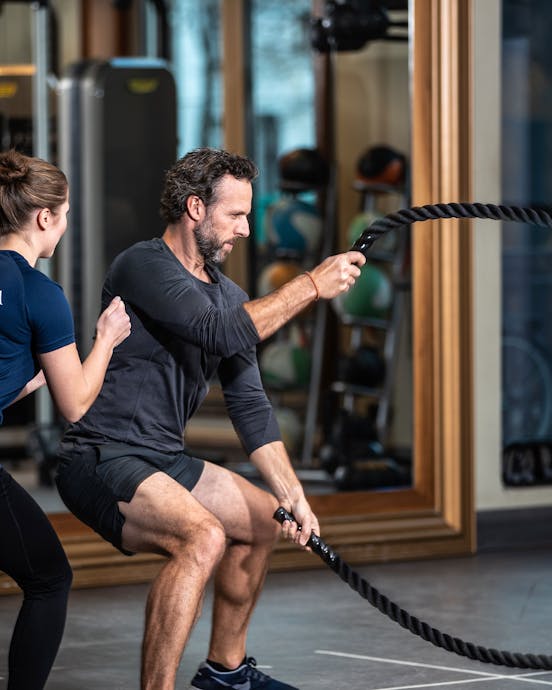
fitness
The indicators you should take into account when aiming to set SMART fitness goals.
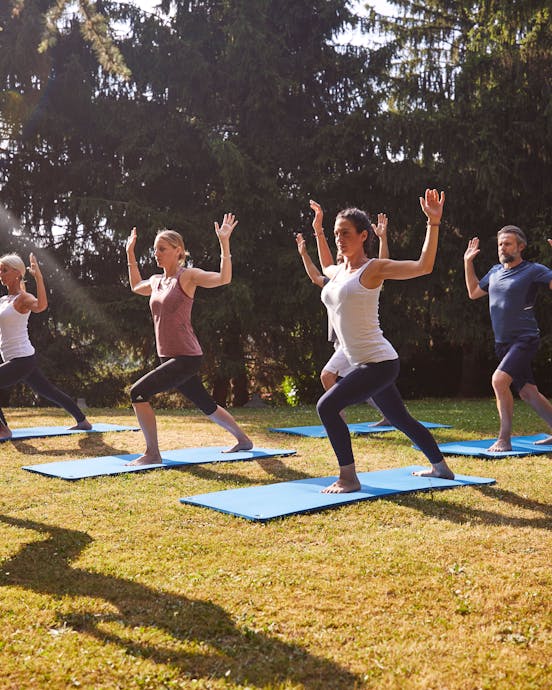
fitness
A quick and effective way to warm up at the beginning of your training session
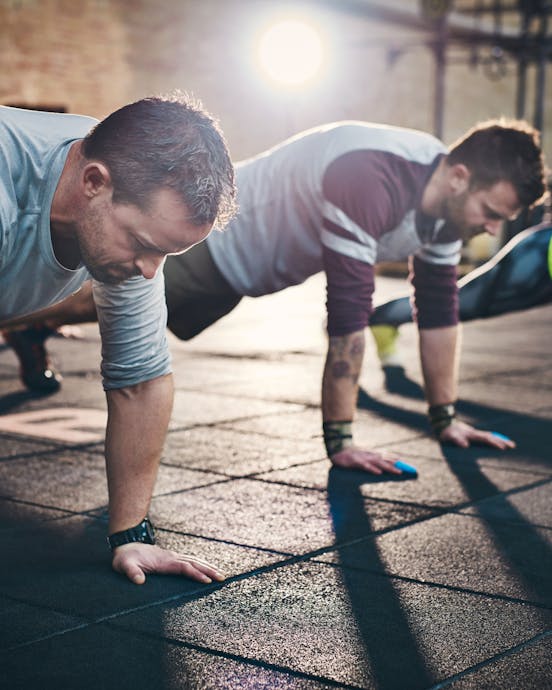
fitness
Aspria instructors Caroline and Chady introduce you to their favourite 3 strength exercises


