
What is it?
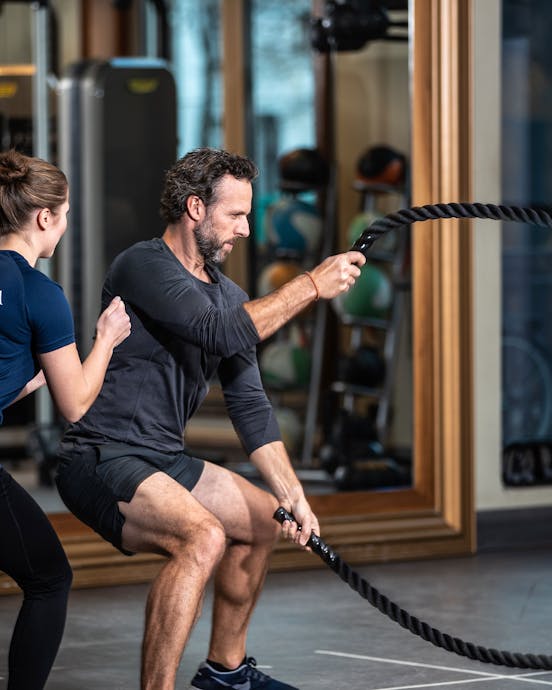
High-intensity interval training (HIIT) involves short intervals of intensive effort, compensated by intervals of recovery. The principle of HIIT is not new: interval training has been part of the routine of many professional athletes for over a century. And in more recent years it has made its way into gyms across the world, as a common practice.
In studio classes, HIIT training generally involves working at more than 80% of your maximum heart rate during exercise intervals and allowing your heart rate to drop during recovery intervals.

Benefits
1. Complex health implications
By combining muscular and cardiovascular work, with rapid intensity changes, HIIT improves your metabolism, increases your performance (physical, physiological, cognitive), and has a preventive effect (against cardiovascular disease, diabetes, obesity, and high cholesterol levels). It is also known to help support proprioception and overall stability.
2. Short but effective
HIIT guarantees quick results. The training sessions are short and that's enough! Because you are exercising in short but intense intervals, you will feel like you are training harder than in a longer, regular workout.
3. Flexible training option
Given the intensity, you don't have to spend hours training at the club. This makes HIIT the ideal type of exercise if you can only spare the time at lunchtime or just after work, before the evening routine at home.
How to get started
1. Set your limits
The goal with HIIT workouts is to challenge and push yourself further. But the most important thing when you start HIIT is to remember to be aware of your own limits.
Florent Rivault, Wellbeing Manager at Aspria explains: "The idea is to take your fitness to the next level, not to have to be ultra-trained to do the course. The HIIT instructors at Aspria understand this, and offer the possibility for everyone to adapt the training to their own physical condition.
2. Prepare your body
Considering the intense energy consumption during the sessions, Florent advises not to practice HIIT on an empty stomach. Ideally, opt for a healthy snack 2 hours before the class and remember to stay hydrated throughout the training.
3. Maintain a balanced approach
HIIT is a workout designed to complement a "classic" sports routine. Experts usually recommend a maximum of 2 HIIT sessions per week, combined with other activities such as swimming, strength training or yoga.
Florent confirms: "There is no need to push your body to the point of exhaustion: wellbeing is a question of balance. Push yourself, but also leave time for stretching, yoga and relaxation in the sauna or steam room. Your body will thank you ! »
Discover all the HIIT class options in our clubs, including Circuit Training, Insanity, TribalFit, Cross Training or BodyAttack :
Related articles
fitness
The indicators you should take into account when aiming to set SMART fitness goals.
fitness
A quick and effective way to warm up at the beginning of your training session

fitness
Aspria instructors Caroline and Chady introduce you to their favourite 3 strength exercises


